Ikon Training
Affiliate Training: Is it right for your organisation?
November 3rd, 2026
6 mins
November 3rd, 2026
6 mins
When training a large workforce, getting the right training to the right people isn’t always straightforward. Shift patterns, staffing pressures and the need to keep services running can make it difficult to release people for training without affecting day-to-day operations.
For some organisations, developing internal training capability offers another way forward. Rather than relying entirely on external delivery, they can equip selected members of their own team to train colleagues, with the right resources, guidance and ongoing support.
But affiliate training isn’t the right answer for every organisation. It requires time, commitment and a clear reason for investing in your people.
So, when does it make sense, and what should you consider before taking that step?
When teams are managing busy services, competing priorities and changing staffing levels, finding time for training can be difficult. Planned sessions may not always align with shift patterns, and new starters can add to an already busy schedule.
For organisations with regular training needs, relying solely on external delivery can make it harder to respond flexibly. Building internal training capability offers another option — one that can help organisations plan sessions around their workforce and respond to changing needs.
It is not a quick fix. Developing internal trainers takes time, and those trainers still need to be released from their usual roles. The value comes from building a capability that can support the organisation over the longer term.
The IKON Affiliate Trainer Programme equips selected members of an organisation to deliver approved IKON Training to their own colleagues.
These individuals develop the skills needed to deliver training effectively, supported by IKON’s resources, guidance and quality assurance processes. The aim is to help organisations build their own training capability while maintaining a consistent approach.
As an IKON Affiliate Trainer, individuals become an extension of the wider IKON Training community, delivering programmes to their in-house teams while representing IKON’s values, standards and code of conduct. They are supported throughout their journey, ensuring they have the confidence, knowledge and resources needed to deliver training effectively and consistently.
This is more than attending a train-the-trainer course and receiving a set of materials. Internal trainers need to understand the subject, engage their colleagues and deliver the programme in line with the approved content and standards.
There are also requirements to consider before getting started. For example, participants need to hold, or be working towards, a Level 3 Award in Education and Training.
The model gives organisations greater ownership over how training is delivered internally, while retaining a relationship with the people who developed and support it.
The value of affiliate training looks different depending on the organisation. For a large employer with a sustained need for training, the impact can extend beyond the number of sessions delivered.
Internal trainers can plan sessions around their organisation’s operational requirements. This can make it easier to reach different teams, accommodate shift patterns and arrange training for new starters or existing colleagues who need a refresher.
It doesn’t remove the need to release people from their usual duties, but it can give organisations more control over when and how training takes place.
The flexibility can be particularly valuable for organisations with high staff turnover, regular recruitment cycles or frequent induction programmes. Rather than waiting to schedule external delivery, internal trainers can respond more quickly to training needs, deliver sessions for smaller groups and help ensure that new colleagues receive training when they need it. This can support a more consistent learning experience across the workforce while reducing delays caused by operational demands.
There is an initial investment in developing trainers, and the organisation needs to allow time for them to deliver training alongside their other responsibilities.
Over time, however, internal delivery may reduce reliance on external trainers. This can be particularly relevant for larger organisations with significant numbers of people to train and an ongoing demand for sessions.
That doesn’t mean affiliate training will automatically be cheaper. The value depends on the scale of the requirement, the resources available internally and how consistently the programme is used.
Not every meaningful outcome can be measured through a direct financial return.
A workforce that feels better prepared to manage difficult situations, recognise potential risks and respond appropriately is valuable in its own right. Developing internal trainers can also help keep workplace safety and good practice visible within an organisation.
By investing in internal capability, organisations can create a lasting legacy of learning and empowerment. Training becomes more than a one-off intervention and instead becomes embedded within everyday practice, helping to reinforce confidence, competence and safer decision-making across teams.
These outcomes aren’t guaranteed by introducing an affiliate programme. They depend on the quality of delivery, the support people receive and whether the organisation creates opportunities to apply what they learn.
The important question is not simply how many people complete training. It’s what your organisation is trying to achieve, and whether developing internal capability is a sensible way to support that goal.
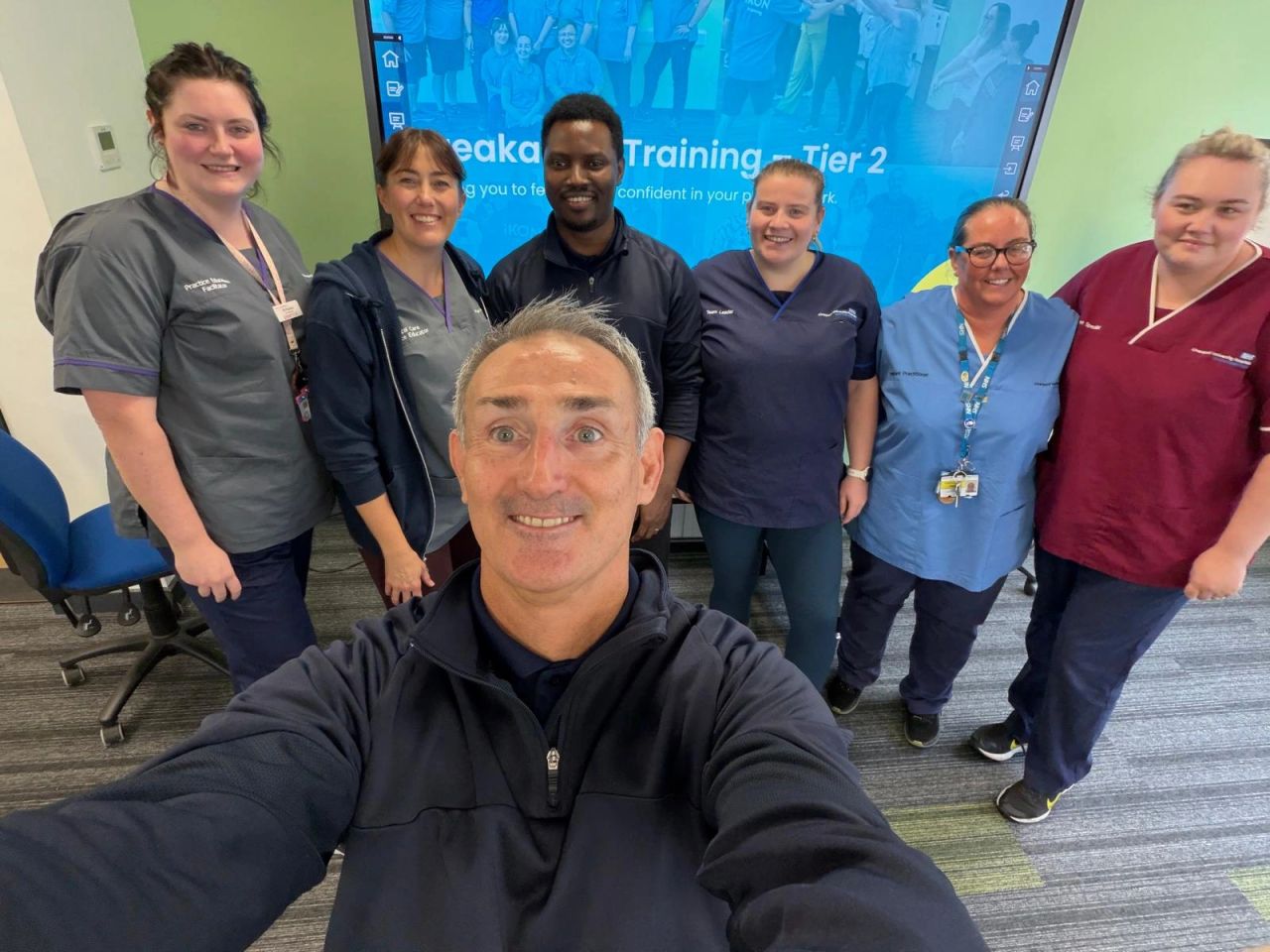
University Hospitals of Liverpool Group provides an example of what internal training capability can look like at scale.
In an update shared in May, Senior Learning, Development & Skills Trainer Mark Bell reported that more than 1,200 colleagues had completed Personal Safety Training in 18 months, with plans in place to continue growing the offer.
That figure gives a sense of the reach an established internal training programme can achieve. Behind it are people taking on the responsibility of helping their colleagues develop the knowledge and skills to work more safely.
An internal trainer team can also bring together experience from different parts of an organisation. People working in clinical services, security, health and safety, and education may each bring a different perspective to the training environment.
That diversity can be valuable, particularly when colleagues understand the realities their teams face every day.
The Liverpool example illustrates the potential of building internal capability over time. It shouldn’t be taken as a promise that every organisation will achieve the same scale or results. The right approach will depend on workforce size, training needs, available resources and the commitment behind the programme.
What it does demonstrate is that affiliate training can become part of a wider, sustained approach to developing people, rather than being treated as a one-off intervention.
Before committing to an affiliate programme, it’s worth looking honestly at your current training needs and what you want to achieve.
It may be a good fit if:
It may be less suitable if:
Size alone doesn’t determine whether affiliate training is right for you. A large organisation may have substantial training needs but lack the capacity to support internal trainers. A smaller organisation may have a clear, recurring need that makes the model worthwhile.
The decision should come down to your circumstances, your people and the outcomes you’re working towards.
Developing internal training capability doesn’t mean handing responsibility over and stepping away.
At IKON, our commitment is to create legacies of empowerment for those we teach. Our mission, ‘Empowering People Together’, extends beyond the initial trainer development programme. Affiliate organisations become part of a wider training community, with ongoing support designed to help trainers continue developing their knowledge, skills and confidence over time.
Quarterly reviews and annual reaccreditation sessions help support ongoing standards, while regular contact gives affiliate organisations opportunities to discuss their progress and needs.
Throughout the affiliate journey, IKON supports trainers with programme updates, quality assurance processes, learner resources and continued professional development opportunities. This helps ensure that skills, knowledge and best practice remain active long after the initial qualification process, supporting both trainers and their learners as needs evolve.
Affiliate training won’t be the right solution for everyone. But for organisations with a clear, ongoing need to develop their people, it can offer a practical way to make training more flexible and build a stronger focus on workplace safety.
If you’re considering whether the model could work for your organisation, speak to the IKON team. We can discuss your training needs, the capacity you have available and whether developing internal trainers is the right next step.
Follow IKON Training on LinkedIn for more practical insights, tools and resources designed to help people communicate confidently and manage conflict professionally.
Or get in touch to explore how we could support your team.
Keep up to date with industry insights, sign up to the IKON Newsletter: