Ikon Training
Hot and bothered: How to deal with conflict in a heated environment
July 8th, 2026
4 mins
July 8th, 2026
4 mins

As temperatures rise, so can pressure.
Hot weather can affect more than someone’s comfort. It can influence patience, emotional regulation and how they respond under stress. In busy public-facing environments, that can have a huge impact on human interactions.
Whether it is a delayed train on a packed platform, a long queue in a retail store, or a busy waiting room with limited ventilation, discomfort can quickly add to existing frustration. That does not mean heat causes conflict. But it can create the kind of conditions where tension builds faster and tolerance becomes lower.
For frontline teams, that can mean more difficult conversations, more emotionally charged interactions and a greater risk of conflict escalating.
So as we move into warmer periods and potential heatwaves, how can staff and organisations prepare.

When people think about conflict, they often picture obvious aggression… raised voices, arguments, threatening behaviour etc.
But most conflict does not begin there, it often begins much earlier.
It can start with:
These early stages are easy to miss because they do not always look dramatic. That’s why understanding conflict means looking beyond behaviour alone. Often, the environment around the interaction plays a significant role in how quickly situations escalate. Noise. Delays. Overcrowding. Discomfort. These pressures can increase emotional strain long before aggression becomes visible.
Conflict rarely appears out of nowhere… it usually builds over a period of time. That’s why understanding the impact of the weather on that process is so important.

Hot weather can intensify already pressured environments.
When people are too warm, dehydrated, tired or uncomfortable, they often have less emotional tolerance.
That can lead to:
Small frustrations can feel much bigger. A delay can feel longer. Poor communication feels more irritating.
The challenge is not that heat creates aggression on its own. The challenge is that it can reduce tolerance. This means situations that may normally stay manageable can quickly become more difficult.
For organisations operating in public-facing sectors such as healthcare, transport, retail and security, that is something worth planning for.
When people feel frustrated, they rarely direct that frustration at the system causing the issue – they direct it at the nearest person. Unfortunately, that person is often a frontline worker:
These roles often involve managing service expectations while also dealing with emotional, stressed or frustrated people, which is a difficult balance at the best of times.
In heated environments, that pressure can increase significantly.
Frontline teams are often expected to remain calm and professional, even when someone in front of them is out of control.
That is why preparation matters. Because staff should not be expected to simply deal with it without support. They need practical skills, confidence and understanding to handle these situations safely.
Having the right skills doesn’t mean they can always stop escalation, but it means they’ll have the confidence to manage situations before they get out-of-hand.
One of the most effective ways to manage conflict is recognising escalation early.
The earlier tension is identified, the greater the opportunity to influence the outcome. Some early warning signs include:
Not every sign means someone will become aggressive, but they can indicate rising pressure. Recognising them early helps staff adjust their response before tension escalates further.
Conflict management is often less about reacting to aggression and more about noticing what happens before it.
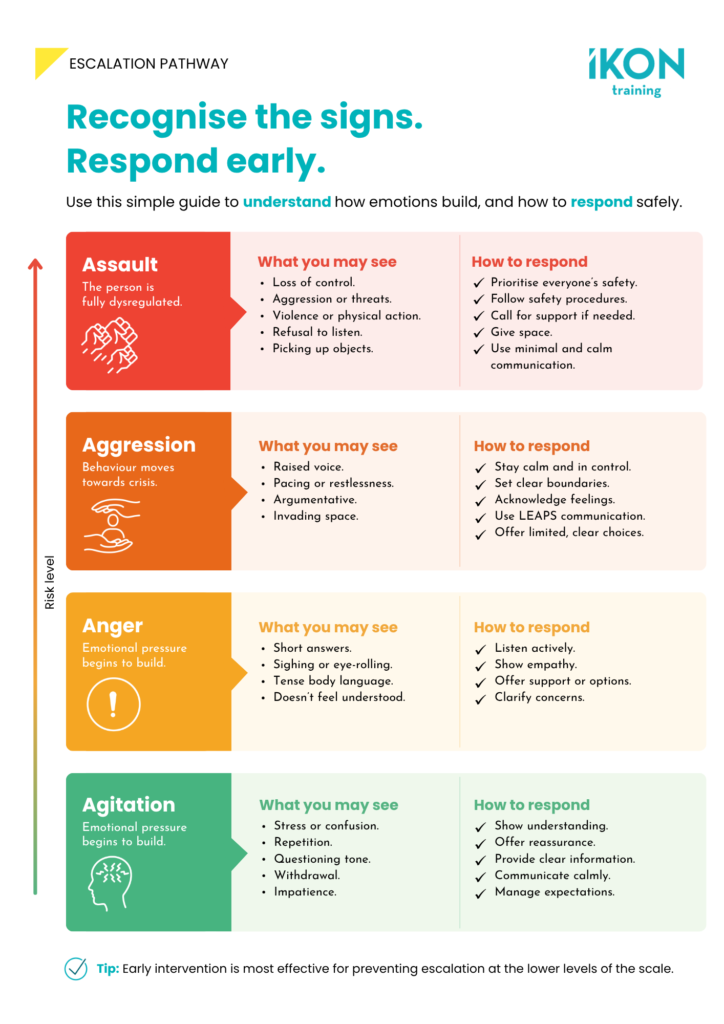
IKON Training Escalation Pathway Downloadable PDF
When someone becomes frustrated or confrontational, the goal is not to win the interaction. The goal is to reduce tension and keep the situation safe. Here are some practical ways to help:
People under stress may process information less effectively. Speaking calmly and clearly can help reduce pressure.
People often calm down when they feel heard. Simple statements such as: “I can see this situation is frustrating” can help lower emotional intensity.
Meeting frustration with frustration rarely helps. Regulating your own response helps maintain control.
Empathy does not mean accepting abuse. Staff should feel confident setting professional boundaries when behaviour becomes unacceptable.
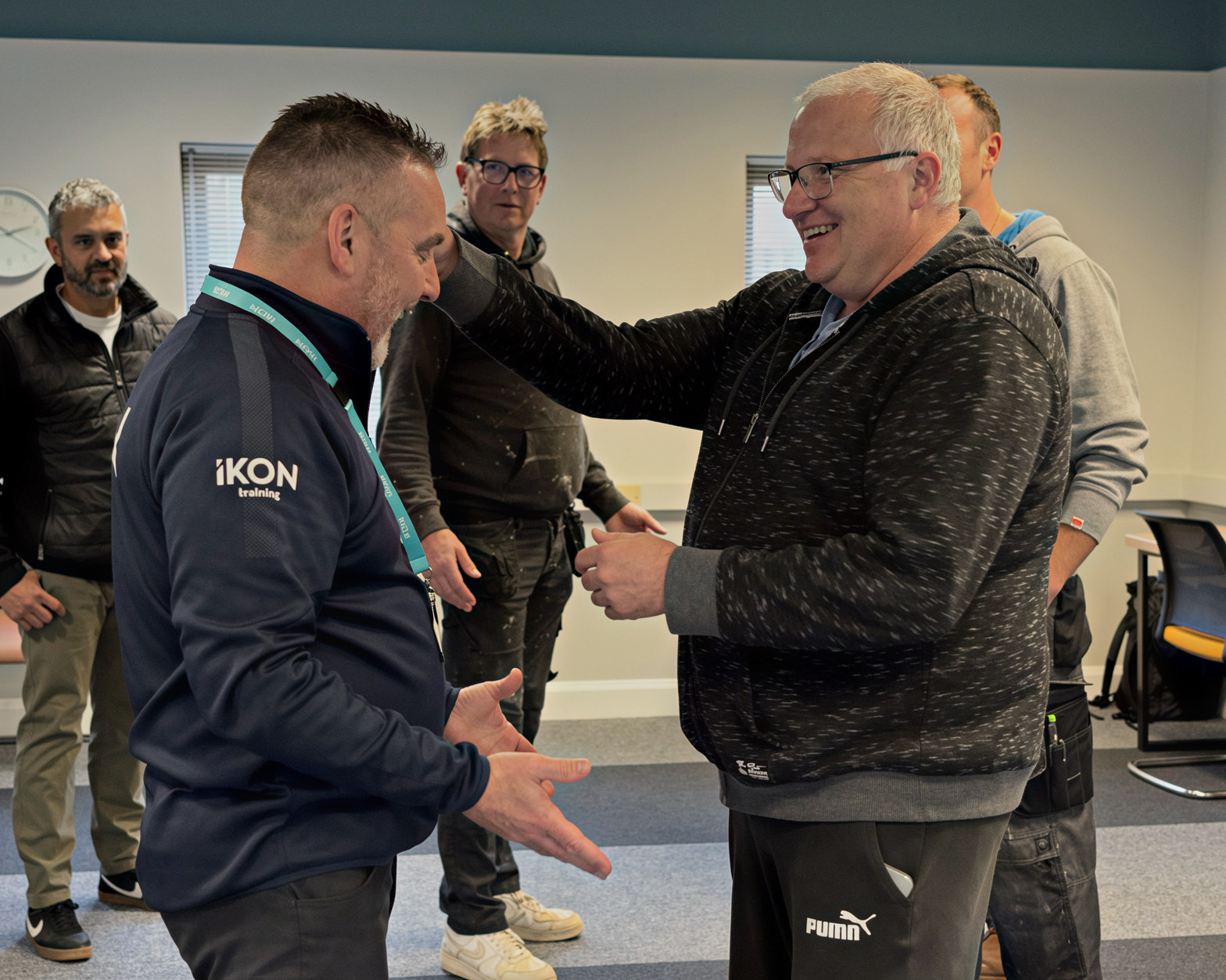
These principles are explored in far greater depth throughout our Training Courses, where we help teams to build practical, scenario-based skills to manage difficult interactions safely and confidently.
Difficult situations will still happen. Hot weather will not disappear. Neither will stress, delays or frustration.
The question is not whether pressure exists. The question is how prepared people feel to respond when it does.
For organisations, this means thinking proactively. Are staff equipped to recognise escalation early? Do they feel confident communicating under pressure? Have they practised responding to challenging behaviour?
For frontline workers, preparation creates something equally important: confidence…
Preparation doesn’t stop difficult situations from happening.
It helps people handle them more safely and confidently.
Stay connected
For organisations looking to strengthen conflict management skills across small teams, or for individuals wanting to build confidence in handling challenging behaviour our Open Courses and tailored training programmes provide practical, expert-led support built around real workplace scenarios.
Connect with me on LinkedIn here.
Keep up to date with industry insights, sign up to the IKON Newsletter: