Ikon Training
Not sure where to start with training? Why open courses are a practical first step
May 13th, 2026
4 mins
May 13th, 2026
4 mins
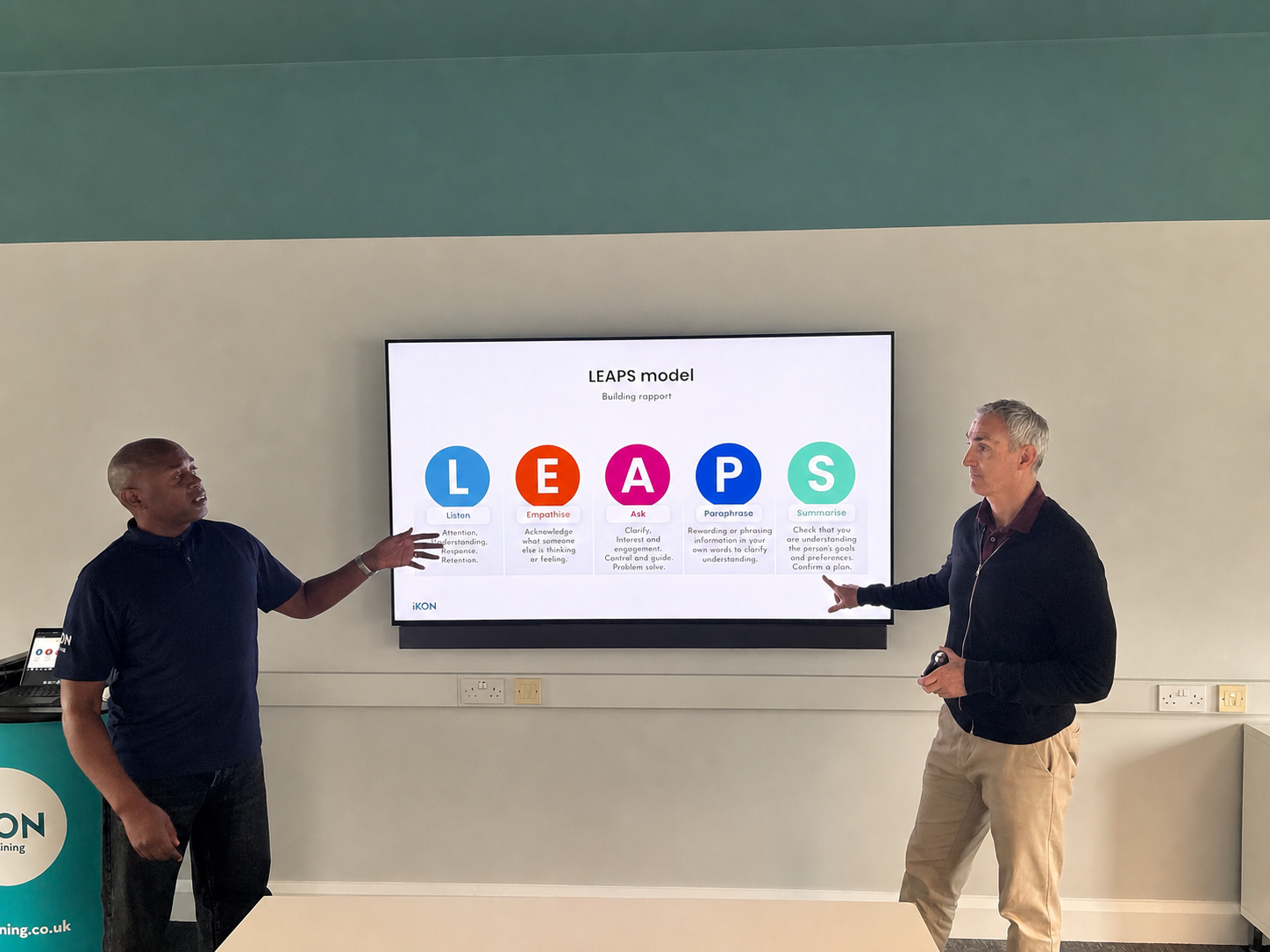
Not everyone has a full training plan in place.
For some, it’s an individual stepping into a role where they’re dealing with more pressure than expected. For others, it’s a small team that doesn’t yet have access to a wider programme. Sometimes it’s simply recognising that situations at work are becoming harder to manage, and wanting to feel more confident in handling them.
That’s where open courses come in.
They create a way to access structured, practical learning without needing to organise a full team session or wait for the right moment internally. For many people, it’s the first step into building skills that make a real difference in day-to-day interactions.
Open courses work because they focus on what people actually need in the moment.
They’re designed around real situations, not just theory. That means learning isn’t about memorising information, but about understanding how to respond when something starts to shift.
As a guide, our role is to support that process. Not by giving scripted responses, but by helping people recognise what’s happening, understand why it’s happening, and respond in a way that reduces the risk of escalation.
Because training doesn’t remove conflict entirely. In many roles, that wouldn’t be realistic.
What it can do is help people:
That’s where the difference is made.
One of the most common concerns people have before attending is:
“Will this actually help me in real situations?”
What learners take away is practical.
They leave with a clearer understanding of how conflict develops, and what to look for before it escalates. They build confidence in how they communicate, especially in moments where emotions are high or situations feel unpredictable.
They also develop a more consistent way of responding, which helps reduce uncertainty and hesitation.
This is particularly relevant in Conflict Resolution Training, where small changes in approach can have a significant impact on how a situation unfolds.
After the session, that learning doesn’t stop.
Learners are enrolled onto the IKON Academy, where they can access their certification, revisit key resources, and continue building confidence over time.
Open courses are designed to support a range of people, particularly those who don’t have access to a structured internal programme.
They’re well suited for:
For anyone in that position, Open Courses provide a clear and accessible way to start.

One of the biggest barriers to training is knowing where to begin.
It’s easy to assume you need a full plan, a full team, or the “right time” to commit. In reality, the most important step is starting.
Open courses remove some of that pressure.
They allow individuals or small groups to access learning. Learning that goes beyond one session. Learning that can be revisited. Learning that will stick.
You don’t need to wait for a wider rollout or a change in structure. You can begin building confidence straight away.
If you’re at the point where you know something needs to change, exploring our Open Courses is often the simplest place to begin.
What happens after training is just as important as the session itself.
Confidence isn’t built in a single moment. It develops over time, through reflection, reinforcement, and continued exposure to real situations.
That’s why access to the IKON Academy matters.
Upon registration, learners are given access to the portal whereby it provides the opportunity to:
This ongoing support helps learning stay relevant, rather than becoming something a one-off session that’s left behind.
It’s completely normal to feel unsure about training.
If accessibility or timing is part of that hesitation, we’ve explored this more in our blog How we make training even more accessible.
But the most important point is this:
You don’t need to feel fully prepared before starting.
Training isn’t about having everything figured out. It’s about building the confidence to handle situations as they arise.
And here’s what that looks like in practice:
When people feel more prepared, situations don’t disappear. But they are handled differently.
Early signs of tension are recognised sooner.
Communication becomes calmer and more deliberate.
Responses feel more controlled, rather than reactive.
Over time, that reduces the likelihood of situations escalating and helps create safer, more positive interactions at work.
That’s the outcome that matters.
Not just completing training, but feeling more confident in the moments where it’s needed most.
Keep an eye on our social media for more tools, case studies, webinars, and resources designed to support clear, confident, safe communication at work.
Follow us on LinkedIn: IKON Training
Or drop us a message to explore how we could support your team more directly.
Find out more about our open courses.
Keep up to date with industry insights, sign up to the IKON Newsletter: