Ikon Training
Beyond the course: Supporting long-term capability
May 29th, 2026
3 mins
May 29th, 2026
3 mins
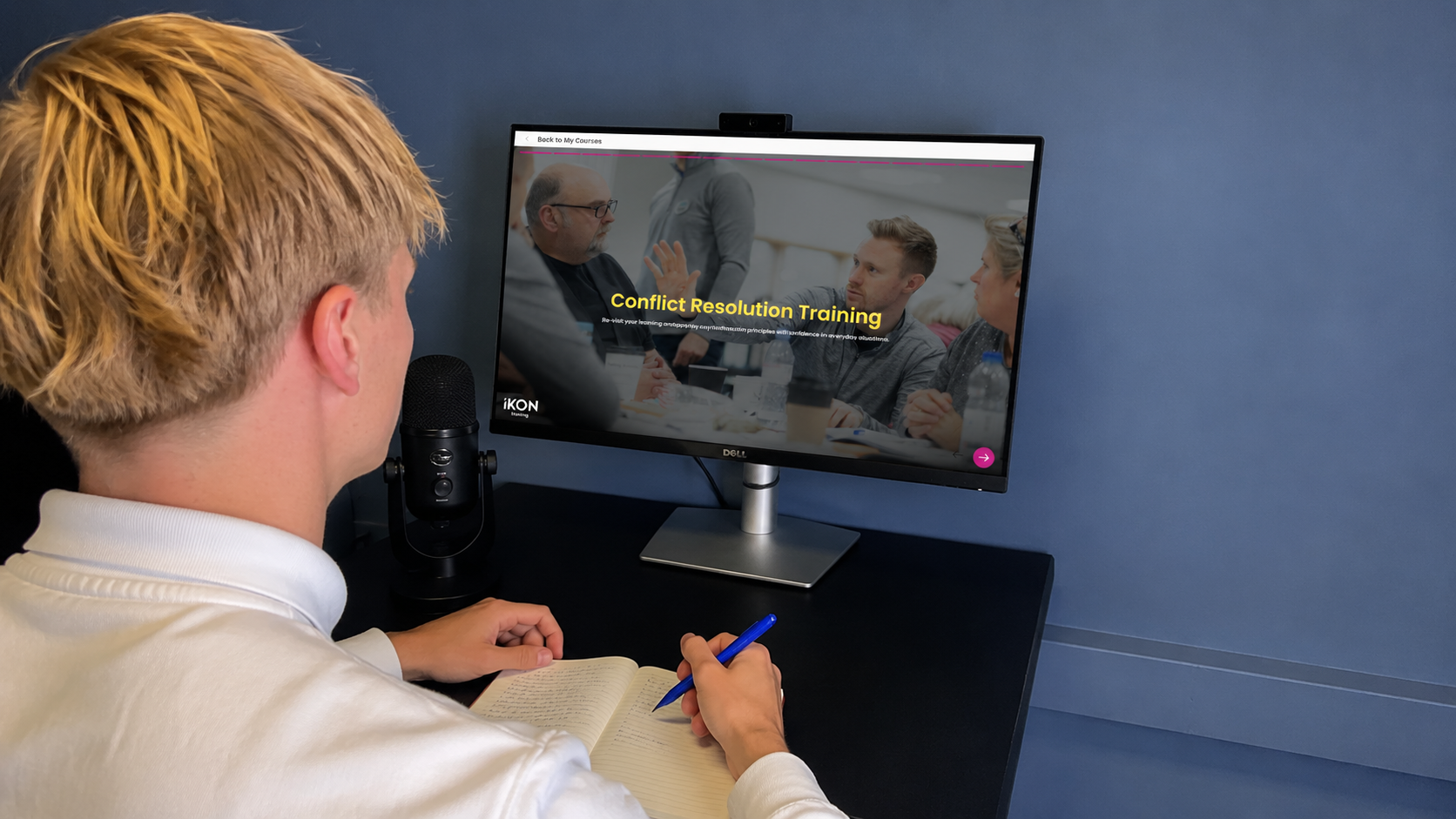
Training can begin to change the way someone thinks, responds and communicates in a single session.
But we are human, and confidence doesn’t stand still after the course finishes.
It’s shaped by what happens next:
Because when challenging situations don’t happen every day, how do people keep those skills fresh? And when pressure does return, will the learning still feel instinctive months later?
These are the questions more organisations are beginning to ask.
And they’re part of the reason learning is evolving beyond the classroom alone.
A strong training session can have a significant impact.
It can increase confidence, shift perspective, and help people feel more prepared for the situations they face at work. Often, learners leave with a clearer understanding of communication, conflict, personal safety and the role they play in preventing escalation early.
That immediate confidence matters.
But capability develops over time.
Because learning is rarely tested in the exact moment someone leaves the room. More often, it’s applied gradually through real conversations, challenging situations, reflection and repetition.
And if those opportunities to revisit learning don’t exist, skills can become harder to recall with confidence.
Not because the training lacked value, but because confidence grows through reinforcement.
This is especially true in areas such as Conflict Resolution Training, where communication, awareness and decision-making are shaped by real human interaction, not memorised scripts.
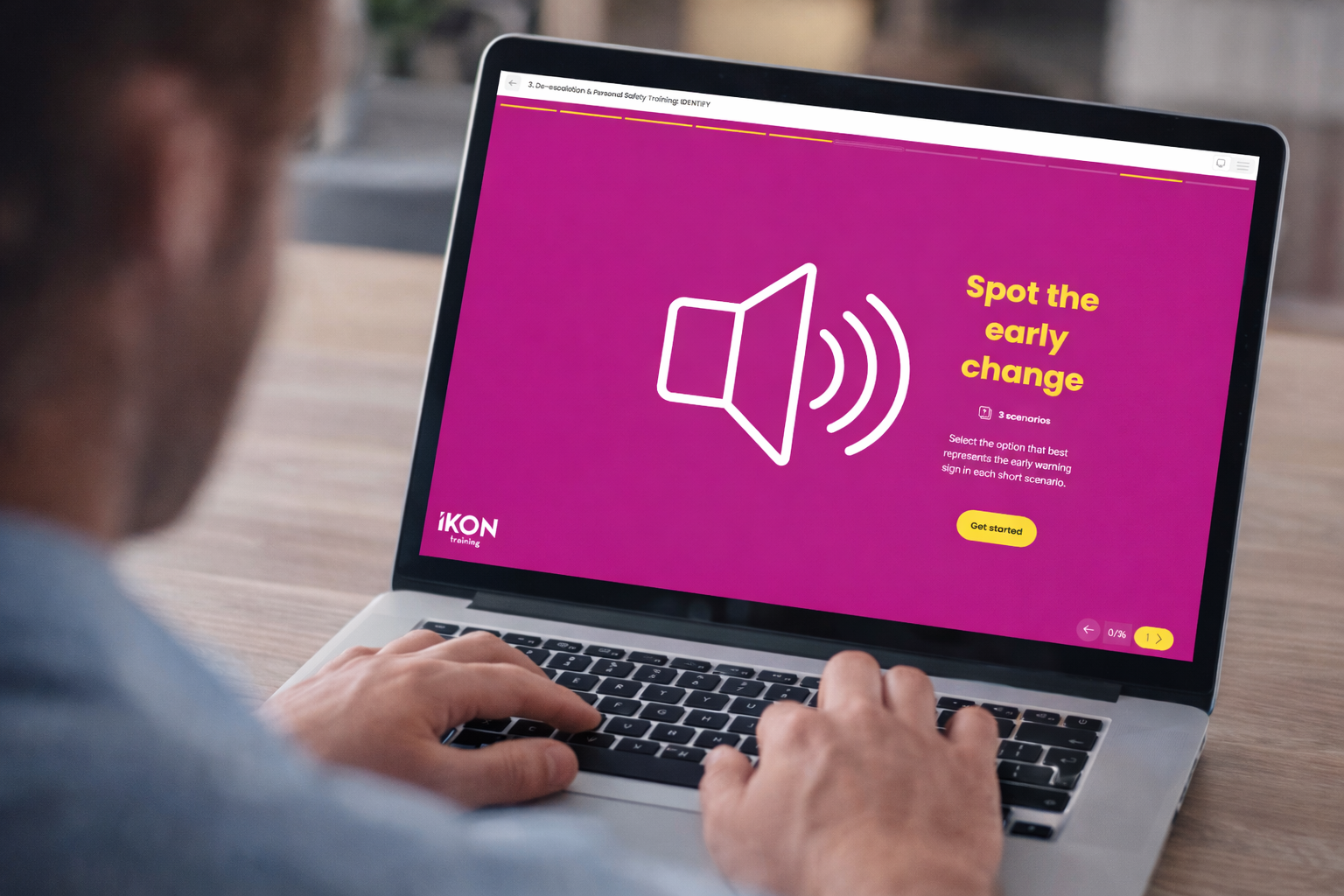
Across sectors, organisations are beginning to look differently at how learning is supported over time.
Training is no longer viewed purely as a one-off event. Increasingly, there’s recognition that development needs to continue beyond the session itself, particularly in environments where people are managing pressure, unpredictability and challenging interactions.
That shift has led to more blended approaches to learning.
Not because in-person training has lost its value; practical discussion, shared experiences and real-time interaction remain essential parts of learning. But organisations are also recognising the importance of creating ways for people to revisit and reinforce that learning afterwards.
Because if confidence fades over time, what supports people between training sessions?
Research consistently shows that people retain and apply learning more effectively when they have opportunities to revisit it over time. This is something many organisations are now building into wider continuous professional development approaches.
That’s where modern learning is evolving.
Through a combination of Delivery Methods, organisations are creating more opportunities for learning to stay visible, accessible and relevant long after the course itself.
Often, the real understanding of training happens after the course.
It happens when someone encounters a difficult interaction and suddenly remembers a concept they discussed weeks earlier. When a conversation starts to escalate and they recognise the early signs sooner than they might have before.
That’s why revisiting learning matters.
Not because people forget everything they learned, but because reinforcement helps knowledge become more familiar, more instinctive and more confidently applied.
In many workplaces, challenging situations are unpredictable. Some people may go weeks or months without needing to actively use certain skills. Others may face them daily.
So how do organisations help learning stay relevant in both situations?
Part of the answer lies in creating opportunities for people to return to the learning when they need it, not just when the course date arrives.
When learning continues, confidence has more opportunity to grow.
People become more familiar with the language, approaches and principles introduced during training. They have more time to reflect on how those ideas apply to their own experiences and working environments.
Over time, that can change the way situations are approached.
Responses become calmer and more deliberate. Early signs of tension are recognised sooner. Communication becomes more consistent across teams.
Importantly, this isn’t about removing conflict entirely. In many public-facing roles, that simply wouldn’t be realistic.
But continued learning can help reduce the likelihood of situations escalating unnecessarily, while helping people feel more confident in how they respond when pressure does arise.
And ultimately, that’s where long-term capability is built.
This thinking has shaped the development of the IKON Academy.
The Academy has been designed to support learning beyond the course itself, helping learners revisit key concepts, reinforce confidence over time, and continue developing within the realities of their roles and work environments.
Whether someone attends an in-person session, joins an open course, or accesses digital learning, the Academy helps keep learning accessible and connected long after the session has finished.
It creates opportunities for learners to:
But more importantly, the Academy supports continuity.
Because long-term capability is rarely built through a single learning experience alone. Confidence is more likely to grow when learning remains present, relevant and easy to understand.
For organisations, long-term capability is about more than providing training.
It’s about creating environments where learning can continue, where confidence can be reinforced, and where people feel supported beyond a single session.
That matters because consistency matters.
When teams revisit learning over time, it becomes easier to build shared approaches, clearer communication and more confident decision-making across the workforce.
It also creates stronger opportunities for tracking of learners’ Continuous Professional Development, as well as Return On Investment.
For learners, continuous learning changes how training feels.
Instead of being a one-off experience, it becomes something they can return to, reflect on and continue building from over time.
Capability is rarely built in a single moment.
It develops through revisiting learning, reflecting on real situations, and reinforcing confidence over time.
That’s why learning should never feel disconnected from the realities people face after the course itself.
The organisations creating long-term confidence are often the ones creating opportunities for learning to continue – not just during training, but beyond it.
Because when learning continues, confidence has more opportunity to grow.
If you’re exploring how ongoing learning and reinforcement could support your people, get in touch with the team to discuss how we can help enhance your learning journey.
Stay connected
Keep an eye on our social media for more tools, case studies, webinars, and resources designed to support clear, confident, safe communication at work.
Follow us on LinkedIn: IKON Training
Or drop us a message to explore how we could support your team more directly.
Keep up to date with industry insights, sign up to the IKON Newsletter: