Ikon Training
Retail aggression: Are we still training for the world we used to have?
April 7th, 2026
3 mins
April 7th, 2026
3 mins
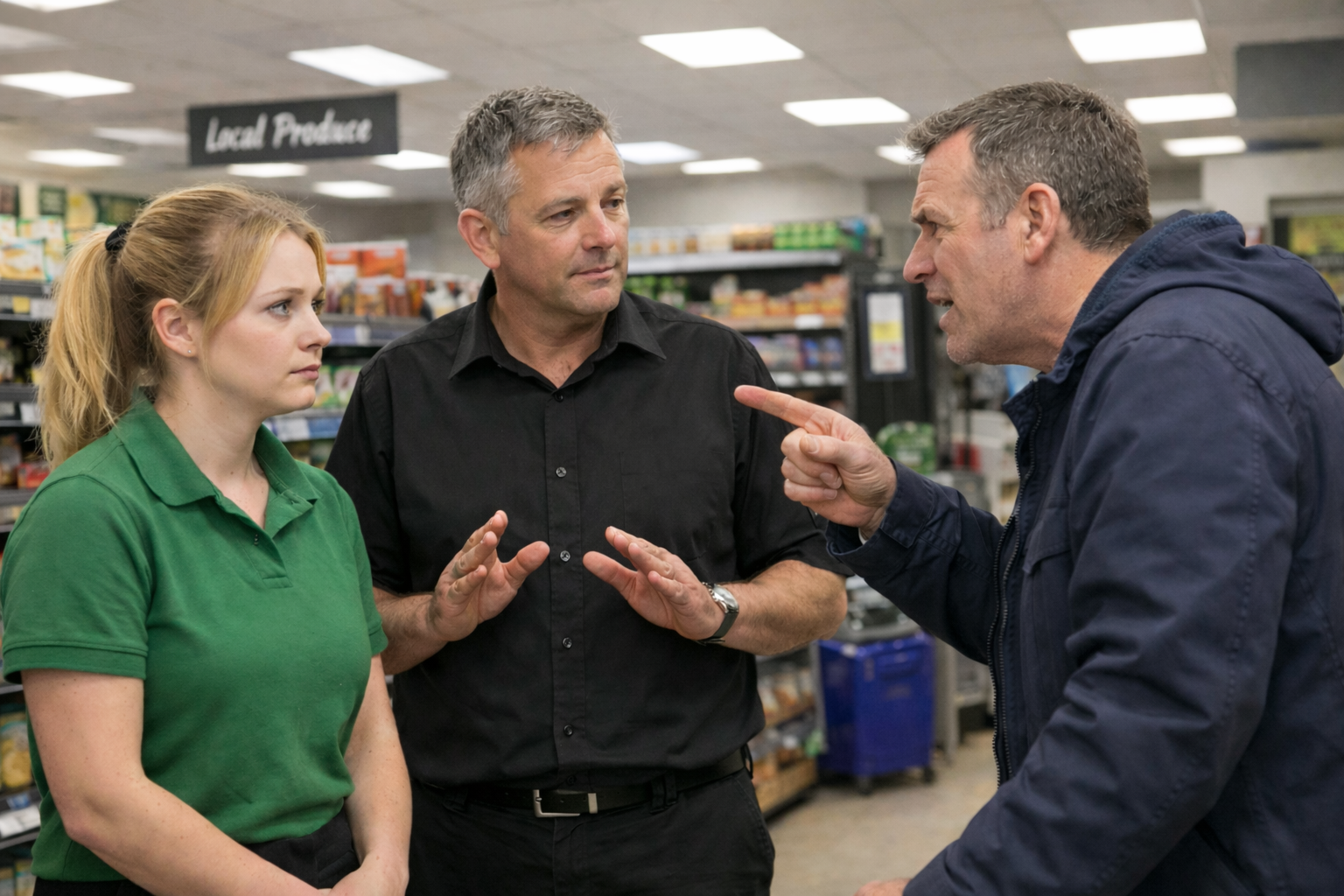
Customer becoming aggravated and abusive with staff
Most frontline teams are still being prepared for one-to-one conflict.
A difficult conversation.
But it is not the only thing happening anymore.
What recent reporting from BBC News and across the retail sector highlights is something more significant:
The environment has changed.
Incidents are becoming more visible, more unpredictable, and in many cases, more collective. Staff are finding themselves in situations they were never prepared for, expected to make the right decision in real time, under pressure, and often without clear guidance.
This is not just about theft.
It is about what happens when a person is placed in a situation where the right response is not obvious, the pressure is high, and the consequences land on them either way.
In most organisations, frontline staff are still being prepared for controlled, one-to-one interactions.
But what many are now facing includes:
But perhaps most importantly:
Frontline staff are being placed in an impossible position.
Do something or do nothing. And either choice can carry risk.
Let me be clear. Staff safety must come first.
Policies that discourage physical intervention exist for a reason. People get hurt. Most retail environments are unpredictable, and the risks are not always visible.
A safety-first approach is not a weakness. It is duty of care. But policy on its own is not enough.
The problem is the gap between policy and reality.
When theft and antisocial behaviour become frequent, when staff feel exposed, and when enforcement feels inconsistent, people start making decisions under stress. Sometimes those decisions are instinctive. Sometimes they are brave. Sometimes they are risky. Often, they are simply human.
That is when organisations need more than rules. They need clarity.
If those answers are unclear, staff end up learning in the moment. That is the most expensive way to learn.
As public debate intensifies, suggestions around stronger enforcement or increased use of force begin to surface. This tells you something important.
People feel that current approaches are not working.
But escalating force introduces new risks. New liability. And new expectations of staff who were never employed to take on enforcement roles.
If we want safer workplaces, the starting point is not force. It is capability.
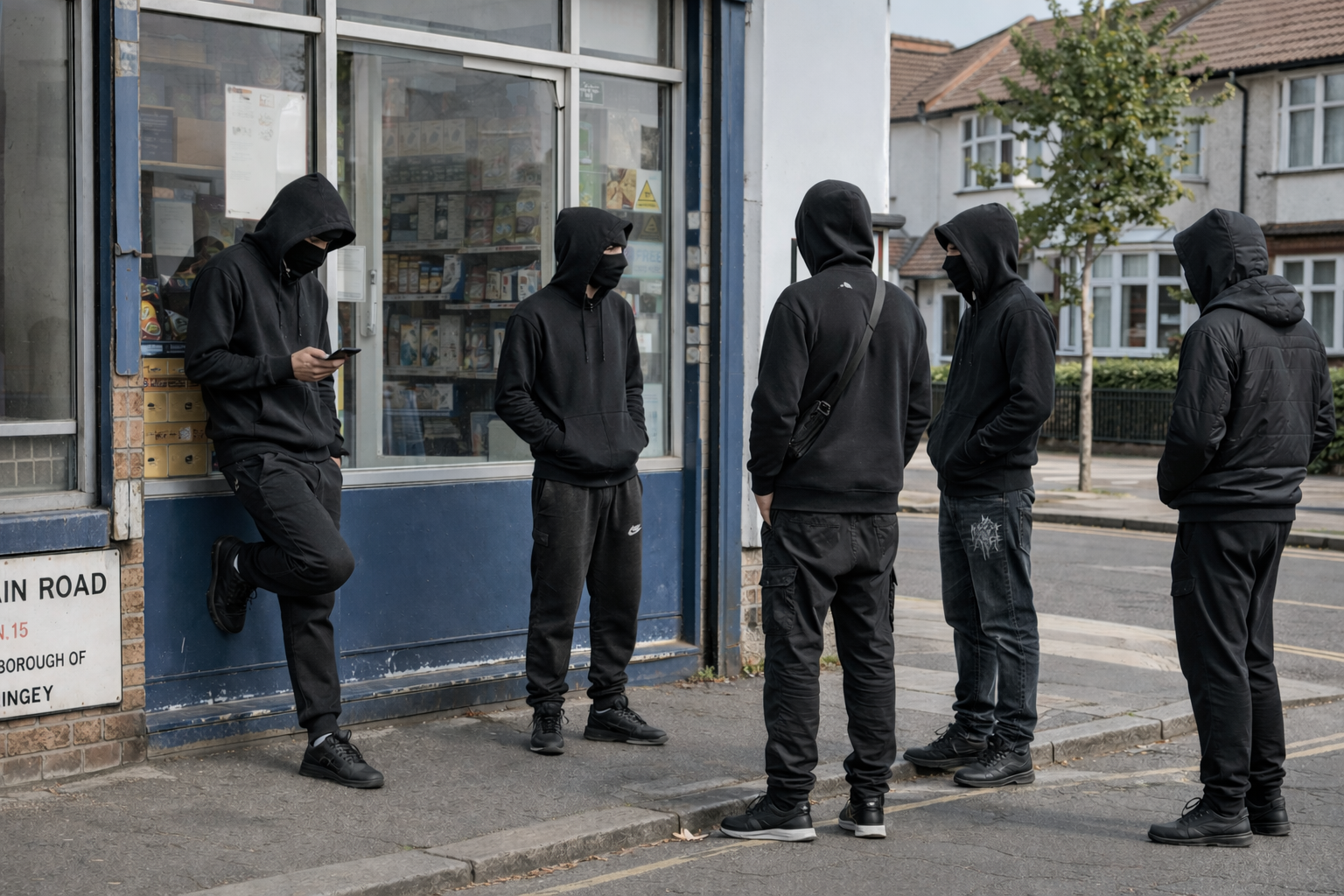
Hooded youths congregating outside shop
A growing number of retail incidents are being shaped by “link-ups” and group behaviour organised through social media. What makes these moments different is the speed and the audience. A situation can go from normal trading to a group entering the store, filming, posturing and testing boundaries within seconds.
Staff are not dealing with one person who is upset. They are dealing with a social dynamic in which behaviour is amplified by peers, performance, and the perception that consequences are unlikely. In some cases, the individuals involved are very young, which adds another layer of complexity.
Retail workers are expected to protect customers, keep colleagues safe, maintain professionalism and make the right decision in a fast-moving environment, while knowing that formal options can feel limited when the people involved are below the age of criminal responsibility in England and Wales.
Training does not remove risk. It changes outcomes.
No training will eliminate aggression or prevent every incident. But it can change what happens next.
Effective preparation helps people to:
This is where confidence is built. And where it is lost, if preparation does not reflect reality.
This is not just a retail issue
Retail is simply where it is most visible right now.
The same patterns are showing up across public-facing roles in transport, healthcare, housing, and community services. When pressure rises across society, frontlines feel it first.
Usdaw’s Freedom from Fear work continues to highlight the scale of violence, threats and abuse directed at shopworkers.
Usdaw’s survey of over 8,980 retail staff found that in 2025 –
https://www.usdaw.org.uk/latest-news/freedom-from-fear-survey-2025/
The point is not to create panic. It is to face reality and respond with something better than hope.
What is changing in organisations that are adapting well
Organisations that are responding effectively are not doing more of the same.
They are doing things differently.
They are:
This is not about removing risk. It is about responding to it with greater clarity and confidence.
Jason Keeley – IKON Training Founder & Director
Where IKON fits
At IKON, we support organisations to close the gap between policy and real-world response.
Our focus is on helping people feel prepared in the moments that matter:
We do not remove risk. We help people respond better within it.
The question for leaders
Are we still preparing people for the world we used to have, while asking them to operate in the world we have now?
If the answer is even “maybe”, it is worth taking a closer look.
Keep up to date with industry insights, sign up to the IKON Newsletter: